Why Traditional South Indian Masalas Taste Better Than Ready-Made Alternatives?
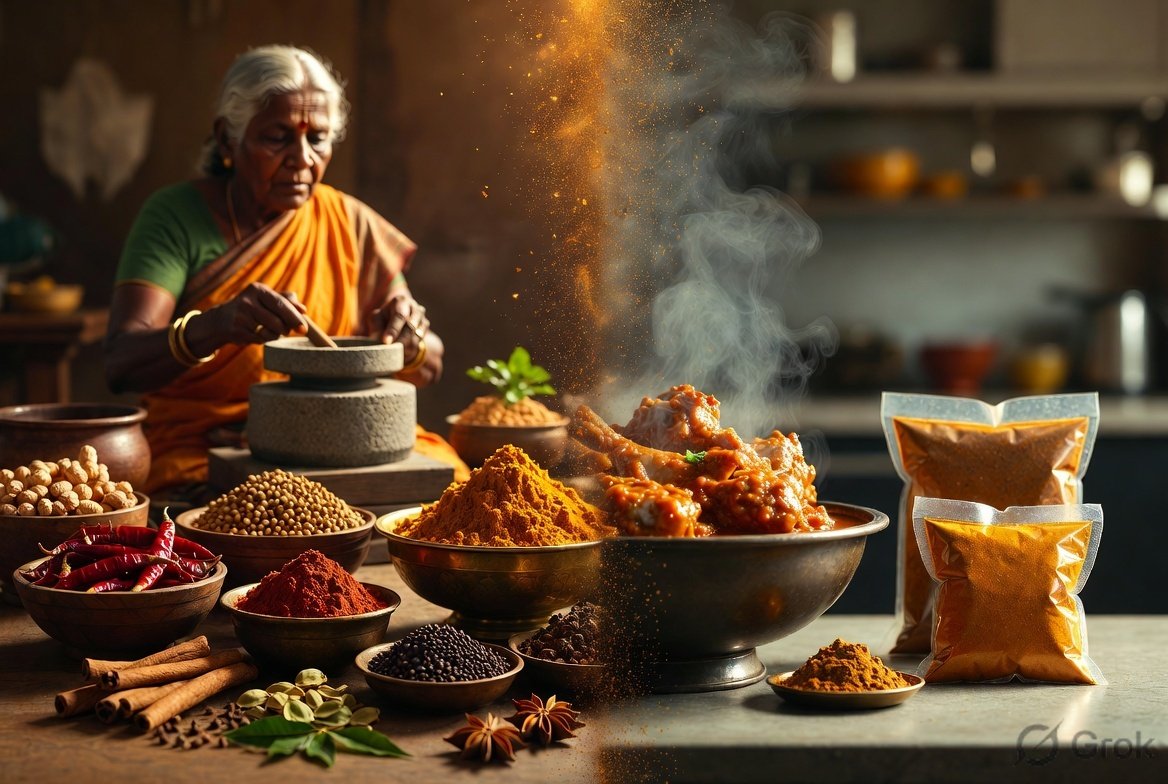
Traditional South Indian Masalas taste better than ready-made alternatives because they are made using freshly sourced spices, roasted in the right proportions, ground in small batches, and contain fewer preservatives. This preserves their natural aroma, essential oils, flavor complexity, and nutritional value, resulting in richer and more authentic South Indian dishes.
Introduction
Have you ever wondered why your grandmother’s sambar or chicken curry had an irresistible aroma that today’s packaged spice mixes often fail to deliver?
The answer isn’t just nostalgia it’s science, tradition, and craftsmanship.
For generations, South Indian households have relied on Traditional South Indian Masalas prepared using carefully selected spices, slow roasting techniques, and family recipes passed down through generations. While ready-made masalas offer convenience, they often sacrifice freshness, aroma, and authenticity to achieve longer shelf life.
Today, as consumers become more health-conscious and quality-focused, authentic spice blends are making a strong comeback. Whether you’re a homemaker preparing daily meals, a bachelor looking for restaurant-quality cooking, or a caterer serving hundreds of guests, understanding the difference can elevate every dish you cook.
Key Takeaways
- Traditional South Indian Masalas retain natural essential oils.
- Fresh grinding enhances aroma and flavor.
- Authentic spice ratios improve taste consistency.
- Homemade masalas usually contain fewer additives.
- Fresh spices preserve more antioxidants.
- Traditional roasting techniques unlock deeper flavors.
- High-quality Indian spice blends improve every recipe.
- Choosing authentic masalas supports healthier cooking.
What Are Traditional South Indian Masalas?
Traditional South Indian Masalas are spice blends made from carefully selected whole spices that are roasted and ground using regional recipes to create authentic flavors for South Indian cuisine.
Unlike industrial spice mixes, traditional masalas focus on:
- Fresh ingredients
- Small-batch grinding
- Balanced spice proportions
- Natural aroma
- Regional authenticity
Common spices include:
- Coriander Seeds
- Dry Red Chillies
- Black Pepper
- Cumin
- Fennel
- Turmeric
- Cinnamon
- Cloves
- Cardamom
- Curry Leaves
- Fenugreek
- Mustard Seeds
Each ingredient contributes unique layers of flavor rather than simply adding heat.
Why Do Traditional South Indian Masalas Taste Better?
Quick Answer
Traditional masalas preserve natural volatile oils through fresh roasting and grinding, creating richer aroma, deeper flavor, and better cooking performance.
1. Freshly Ground Spices Retain Essential Oils
Whole spices naturally contain aromatic oils.
These oils begin evaporating once spices are ground.
Traditional South Indian Masala makers usually grind spices in small batches, ensuring maximum freshness.
Ready-made powders may remain on shelves for several months before reaching your kitchen.
The result?
- Stronger aroma
- Better taste
- Fuller body
- Richer color
2. Slow Roasting Unlocks Flavor
Roasting isn’t just about drying spices.
It activates natural compounds that create:
- Nutty notes
- Sweetness
- Earthiness
- Smokiness
Every spice requires different roasting temperatures.
Traditional methods respect these differences, producing balanced authentic masala powder without burning delicate spices.
3. No Unnecessary Fillers
Many premium traditional spice brands avoid:
- Artificial colors
- Synthetic flavors
- Excess starch
- Cheap fillers
Instead, the focus remains on pure spices.
That purity directly influences taste.
4. Regional Recipes Matter
South India isn’t one single cuisine.
Tamil Nadu, Kerala, Karnataka, Andhra Pradesh, and Telangana each use unique spice combinations.
Examples include:
| Region | Signature Spice Character |
|---|---|
| Tamil Nadu | Pepper, fennel, coriander |
| Kerala | Black pepper, cloves, cinnamon |
| Andhra | High chilli intensity |
| Karnataka | Mild sweetness with coconut influence |
| Chettinad | Bold pepper and whole spices |
Traditional recipes preserve these regional identities.
Traditional South Indian Masalas vs Ready-Made Masalas
| Feature | Traditional South Indian Masalas | Ready-Made Alternatives |
|---|---|---|
| Freshness | High | Moderate |
| Aroma | Strong | Often reduced |
| Essential Oils | Well preserved | Gradually lost |
| Preservatives | Minimal or none | Often included |
| Flavor Depth | Rich | Uniform |
| Regional Authenticity | Excellent | Generic |
| Nutritional Value | Higher | Slightly lower |
| Shelf Life | Shorter | Longer |
Why Aroma Makes Such a Big Difference?
Scientists estimate that much of what we perceive as flavor comes from aroma.
When spices lose volatile compounds during storage, food tastes flatter.
Fresh Indian spice blends release aroma immediately after hitting hot oil.
This process, called blooming, creates the signature fragrance associated with authentic South Indian cooking.
Are Homemade Traditional South Indian Masalas Better?
Quick Answer
Homemade masalas offer maximum freshness and complete ingredient control, while high-quality traditional branded masalas provide similar authenticity with greater convenience.
Homemade masalas allow you to:
- Adjust spice levels
- Avoid preservatives
- Use premium ingredients
- Roast according to personal preference
However, preparing them regularly requires:
- Time
- Experience
- Proper storage
- Consistent ingredient sourcing
This is why many families choose trusted traditional brands that follow authentic recipes.
Health Benefits of Authentic Masala Powder
Many spices naturally contain beneficial plant compounds.
Examples include:
Turmeric
Contains curcumin, known for antioxidant properties.
Black Pepper
Contains piperine, which may improve nutrient absorption.
Cumin
Supports digestion.
Coriander
Rich in antioxidants.
Fenugreek
Traditionally associated with digestive wellness.
Because traditional masalas undergo minimal processing, they often retain more of these natural compounds than heavily processed alternatives.
Why Quality Ingredients Matter?
Not all chilli powder tastes the same.
Not all coriander seeds are equally aromatic.
Premium spice makers carefully source:
- Mature spices
- Seasonal harvests
- Naturally dried ingredients
- Clean raw materials
Better ingredients naturally produce better food.
Professional chefs often emphasize that great cooking starts with quality spices rather than expensive cookware.
How Traditional South Indian Masalas Improve Different Dishes?
Sambar
Fresh coriander and roasted fenugreek produce richer depth.
Chicken Curry
Fresh pepper and fennel create bold aromatic layers.
Mutton Curry
Whole spices provide long-lasting warmth.
Rasam
Fresh pepper and cumin deliver bright, sharp flavors.
Vegetable Curry
Balanced spice blends enhance vegetables without overpowering them.
Signs You’re Buying an Authentic Masala
Look for:
- Clearly listed ingredients
- No artificial colors
- Fresh manufacturing date
- Traditional recipes
- Strong natural aroma
- Fine yet fluffy texture
- Trusted regional manufacturers
Avoid products that:
- Smell dull
- Have excessive additives
- Lack ingredient transparency
Expert Insight
Professional chefs increasingly recommend buying spice powders in smaller quantities instead of bulk packs.
Why?
Ground spices gradually lose aroma after opening.
Buying smaller packs more frequently helps maintain freshness and cooking quality.
The Growing Demand for Authentic Spice Blends
Consumer interest in traditional foods continues to rise as more families seek cleaner labels, regional flavors, and minimally processed ingredients. Home cooking, online grocery shopping, and food content on social media have also encouraged people to rediscover authentic South Indian recipes using high-quality masalas.
This trend has increased demand for homemade masalas, artisanal spice blends, and regional brands that prioritize freshness over long shelf life.
People Also Ask
Why do South Indian masalas taste different?
South Indian masalas use regional spice combinations, roasting techniques, and freshly ground ingredients that create deeper aroma and balanced flavors.
Is homemade masala healthier?
Homemade masalas generally contain fewer additives and allow complete control over ingredients, making them a preferred choice for many households.
How long do traditional masalas stay fresh?
When stored in airtight containers away from heat and sunlight, most traditional spice powders retain their best flavor for about three to six months.
Can ready-made masalas match homemade taste?
Premium traditional brands can come close, especially when they use fresh ingredients, authentic recipes, and small-batch processing. However, freshly prepared homemade masalas often deliver the most vibrant aroma.
Choosing the Right Masala for Your Kitchen
| User | Best Choice |
|---|---|
| Homemakers | Traditional authentic masalas |
| Bachelors | Premium ready-to-cook traditional blends |
| Restaurants | Bulk authentic spice blends |
| Caterers | Consistent traditional masala powder |
| Beginners | Trusted branded traditional masalas |
Conclusion
The secret behind unforgettable South Indian cooking isn’t hidden in expensive cookware or complicated recipes it’s in the quality of the spices.
Traditional South Indian Masalas preserve freshness, aroma, nutrition, and authenticity in ways that many mass-produced ready-made alternatives simply cannot. Their carefully roasted ingredients, balanced recipes, and regional heritage create meals that taste richer, smell better, and leave lasting memories around the dining table.
Whether you’re preparing everyday family meals or cooking for a large gathering, choosing authentic masala powder is one of the simplest ways to elevate your dishes.
Looking for truly Traditional South Indian Masalas? Explore premium traditional spice blends made with carefully selected ingredients, roasted to perfection, and crafted to bring the taste of home to every meal.
FAQs
1. Why are Traditional South Indian Masalas more aromatic?
They are made from freshly roasted whole spices that retain natural essential oils, producing stronger aroma and richer flavor.
2. Are ready-made masalas unhealthy?
Not necessarily. High-quality ready-made masalas can be excellent, but some products may include preservatives, anti-caking agents, or artificial colors. Always read the ingredient label.
3. How should I store masala powder?
Store it in an airtight container in a cool, dry place away from direct sunlight and moisture to preserve freshness.
4. Which spices are commonly found in Traditional South Indian masalas?
Coriander, cumin, black pepper, fennel, turmeric, dry red chillies, cinnamon, cloves, cardamom, fenugreek, mustard seeds, and curry leaves.
5. Can authentic masalas be used for North Indian dishes?
Yes. While each cuisine has distinct flavor profiles, many authentic spice blends are versatile and can enhance a variety of Indian recipes.
6. How can I identify premium authentic masala powder?
Look for transparent ingredient lists, fresh manufacturing dates, strong natural aroma, no artificial colors, and trusted regional brands.
Find our other blogs
Traditional Chicken Masala – Complete Cooking Guide
How to Identify Pure Chilli Powder
Honey Syrup vs Sugar: Which Is Better?
Do Follow us on Instagram – Annai Foods products2


Log in
By continuing, you accept the Website Regulations , Regulations for the sale of alcoholic beverages and the Privacy Policy
You dont have an account yet? Register Now