How Many Dates Should You Eat Per Day?
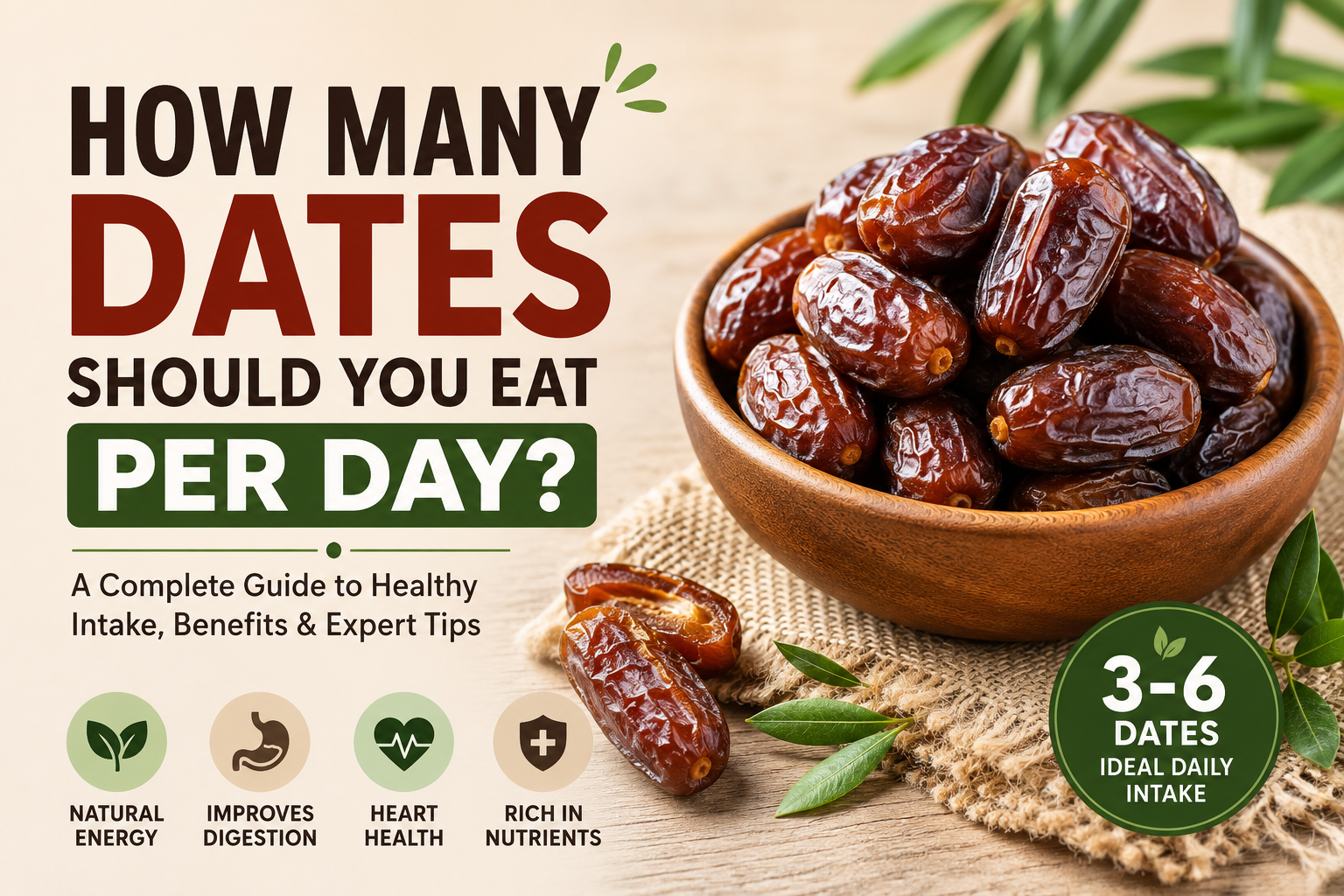
Dates have been cherished for thousands of years not just for their naturally sweet taste, but also for their impressive nutritional value. Whether you’re looking for a healthier snack, a quick energy boost, or a natural way to satisfy sugar cravings, dates are an excellent choice.
But one question often comes up:
How many dates should you eat per day?
The answer depends on your age, activity level, health goals, and overall diet. While dates are packed with fiber, vitamins, minerals, and antioxidants, they are also naturally high in sugars and calories. Eating the right amount allows you to enjoy their benefits without overdoing your daily calorie intake.
Dates per day
Most healthy adults can safely eat 3–6 dates per day as part of a balanced diet.
- Weight management: 2–3 dates daily
- General wellness: 3–5 dates daily
- Athletes or active individuals: 5–7 dates daily
- People with diabetes: Consult your healthcare provider, but 1–2 dates paired with protein or nuts may fit into a balanced meal plan.
The ideal daily dates intake varies based on your nutritional needs and lifestyle.
Key Takeaways
- Most adults benefit from eating 3–6 dates daily.
- Dates are rich in fiber, potassium, magnesium, and antioxidants.
- Eating too many dates can increase calorie and natural sugar intake.
- Pair dates with nuts or yogurt for balanced blood sugar response.
- Dates make an excellent replacement for refined sugary snacks.
Why Are Dates Considered a Superfood?
Dates are the fruit of the date palm tree (Phoenix dactylifera) and are widely cultivated in the Middle East, North Africa, and parts of Asia.
They provide a unique combination of:
- Natural carbohydrates
- Dietary fiber
- Potassium
- Magnesium
- Iron
- Copper
- Vitamin B6
- Polyphenol antioxidants
Unlike processed sweets, dates also provide essential nutrients that support overall health.
How Many Dates Per Day Is Ideal?
For Most Healthy Adults
Recommended intake: 3–6 dates daily
This quantity provides:
- Natural energy
- Good fiber intake
- Essential minerals
- Antioxidant support
- Controlled calorie intake
For most people, this amount fits comfortably into a healthy diet.
Daily Dates Intake by Lifestyle
| Lifestyle | Recommended Daily Intake |
|---|---|
| Weight loss | 2–3 dates |
| General health | 3–5 dates |
| Active lifestyle | 5–7 dates |
| Athletes | 6–8 dates (depending on calorie needs) |
| Children | 1–3 dates |
| Older adults | 2–4 dates |
Remember that these are general guidelines and individual needs may vary.
Nutritional Value of Dates
Approximate nutrition per 100 grams:
| Nutrient | Amount |
| Calories | 277 kcal |
| Carbohydrates | 75 g |
| Natural Sugars | 66 g |
| Fiber | 7 g |
| Protein | 2 g |
| Potassium | 696 mg |
| Magnesium | 54 mg |
Because dates are nutrient-dense, even a few pieces contribute significantly to your daily nutrition.
Health Benefits of Eating Dates Daily
1. Excellent Source of Natural Energy
Dates contain glucose, fructose, and sucrose that provide quick and sustained energy.
They’re an ideal snack:
- Before workouts
- During long workdays
- While traveling
- During fasting periods
2. Supports Digestive Health
Fiber helps:
- Improve bowel movements
- Support beneficial gut bacteria
- Reduce constipation
- Promote digestive comfort
Eating dates regularly contributes to a healthier digestive system.
3. Rich in Antioxidants
Dates naturally contain antioxidants such as:
- Flavonoids
- Carotenoids
- Phenolic acids
These compounds help protect cells from oxidative stress.
4. Heart-Friendly Nutrition
Dates provide potassium and magnesium, two minerals associated with healthy heart function and normal blood pressure.
Replacing processed sugary snacks with dates may support better dietary habits.
5. Helps Satisfy Sweet Cravings Naturally
Many people struggle to reduce refined sugar consumption.
Dates offer:
- Natural sweetness
- Fiber
- Micronutrients
This makes them a smarter alternative to candy and desserts.
6. May Support Bone Health
Dates contain minerals including:
- Calcium
- Magnesium
- Phosphorus
- Copper
These nutrients contribute to maintaining healthy bones as part of a balanced diet.
Can Eating Too Many Dates Be Harmful?
Yes.
Although dates are healthy, excessive consumption may lead to:
- Higher calorie intake
- Increased sugar consumption
- Digestive discomfort from excess fiber
- Weight gain if overall calories exceed daily needs
Moderation is the key.
Are Dates Good for Weight Loss?
Yes, when eaten in moderation.
Dates can actually support weight management because they:
- Keep you fuller longer
- Reduce cravings
- Replace processed desserts
- Provide slow-digesting fiber
However, portion control is essential.
A practical approach:
- Eat 2–3 dates
- Pair with almonds or walnuts
- Avoid eating large quantities at once
Can People with Diabetes Eat Dates?
People with diabetes do not necessarily need to avoid dates completely.
Instead:
- Monitor portion size
- Pair dates with protein or healthy fats
- Track blood glucose response
- Follow medical advice
Eating one or two dates with nuts is often a more balanced choice than consuming sugary sweets.
Best Time to Eat Dates
Morning
Great for:
- Natural energy
- Breakfast smoothies
- Oatmeal
- Healthy start to the day
Before Exercise
Dates provide quick carbohydrates that fuel physical activity.
Many athletes eat dates 30–60 minutes before workouts.
Evening Snack
Pair dates with:
- Greek yogurt
- Milk
- Mixed nuts
This combination helps increase satiety and provides a nutritious snack.
Different Types of Dates
Popular varieties include:
| Variety | Taste | Texture |
| Medjool | Rich and caramel-like | Soft |
| Ajwa | Mildly sweet | Soft |
| Deglet Noor | Balanced sweetness | Firm |
| Safawi | Deep sweet flavor | Soft |
| Mabroom | Less sweet | Chewy |
Each variety offers similar nutritional benefits with slight differences in taste and texture.
Smart Ways to Include Dates in Your Diet
Instead of eating dates alone every day, try:
- Blend into smoothies
- Add to oatmeal
- Stuff with almonds
- Chop into salads
- Mix with yogurt
- Add to homemade energy balls
- Use in healthy desserts
- Include in trail mix
These methods increase variety while maintaining nutritional value.
Common Mistakes to Avoid
- Eating too many dates at once
- Replacing all fruits with dates
- Ignoring total calorie intake
- Choosing sugar-coated dates
- Not checking ingredient labels on packaged products
Choose naturally dried dates with no added sugar whenever possible.
Expert Insight
Nutrition experts generally agree that dates are among the healthiest naturally sweet fruits when consumed in moderation. Their combination of fiber, potassium, antioxidants, and natural sugars makes them a nutrient-dense snack that can fit into most healthy eating patterns.
The ideal intake depends on your lifestyle, but for many adults, 3–6 dates daily strikes a practical balance between nutrition and calorie control.
People Also Ask
Is it okay to eat dates every day?
Yes. Most healthy adults can eat dates daily as part of a balanced diet. Eating 3–6 dates each day provides fiber, minerals, and antioxidants without excessive calories.
Can I eat dates on an empty stomach?
Yes. Dates are easy to digest and provide natural energy, making them a good morning snack for many people.
How many calories are in one date?
Depending on the variety, one medium date typically contains 20–70 calories, with Medjool dates generally being larger and higher in calories.
Are dates healthier than sugar?
Yes. Dates contain natural sugars along with fiber, vitamins, minerals, and antioxidants, making them a more nutritious choice than refined sugar.
Should children eat dates daily?
Yes, in moderation. One to three dates can be a healthy snack for children, depending on their age and dietary needs.
Conclusion
Dates are one of nature’s most nutritious and satisfying fruits. They’re naturally sweet, rich in fiber, packed with essential minerals, and versatile enough to fit into almost any healthy diet.
For most adults, 3–6 dates per day is an ideal amount to enjoy their nutritional benefits while maintaining a balanced calorie intake. Pair them with nuts, yogurt, or other wholesome foods to create filling, nutrient-rich snacks.
If you’re looking for premium-quality dates with great taste and freshness, choosing trusted, carefully sourced products ensures you enjoy both flavor and nutrition in every bite.
Explore the range of high-quality dates from Annai Foods and make healthy snacking a delicious daily habit.
FAQs
1. How many dates should I eat daily for good health?
Most healthy adults can enjoy 3–6 dates per day as part of a balanced diet.
2. Are dates good for weight loss?
Yes. When eaten in moderation, dates help satisfy sweet cravings and provide fiber that promotes fullness.
3. Can diabetics eat dates?
Many people with diabetes can include small portions of dates in their diet, but they should consult a healthcare professional and monitor blood sugar levels.
4. What is the best time to eat dates?
Morning, before exercise, or as a healthy evening snack are all excellent options.
5. Which type of dates is healthiest?
Most varieties offer similar nutritional benefits. The best choice depends on your taste preference and portion size.
Do follow us on Instagram – Annai Food Products2
Visit our websites for home made products – Annaifoods.shop


Log in
By continuing, you accept the Website Regulations , Regulations for the sale of alcoholic beverages and the Privacy Policy
You dont have an account yet? Register Now