10 Garam Masala Uses Every Indian Kitchen Should Know
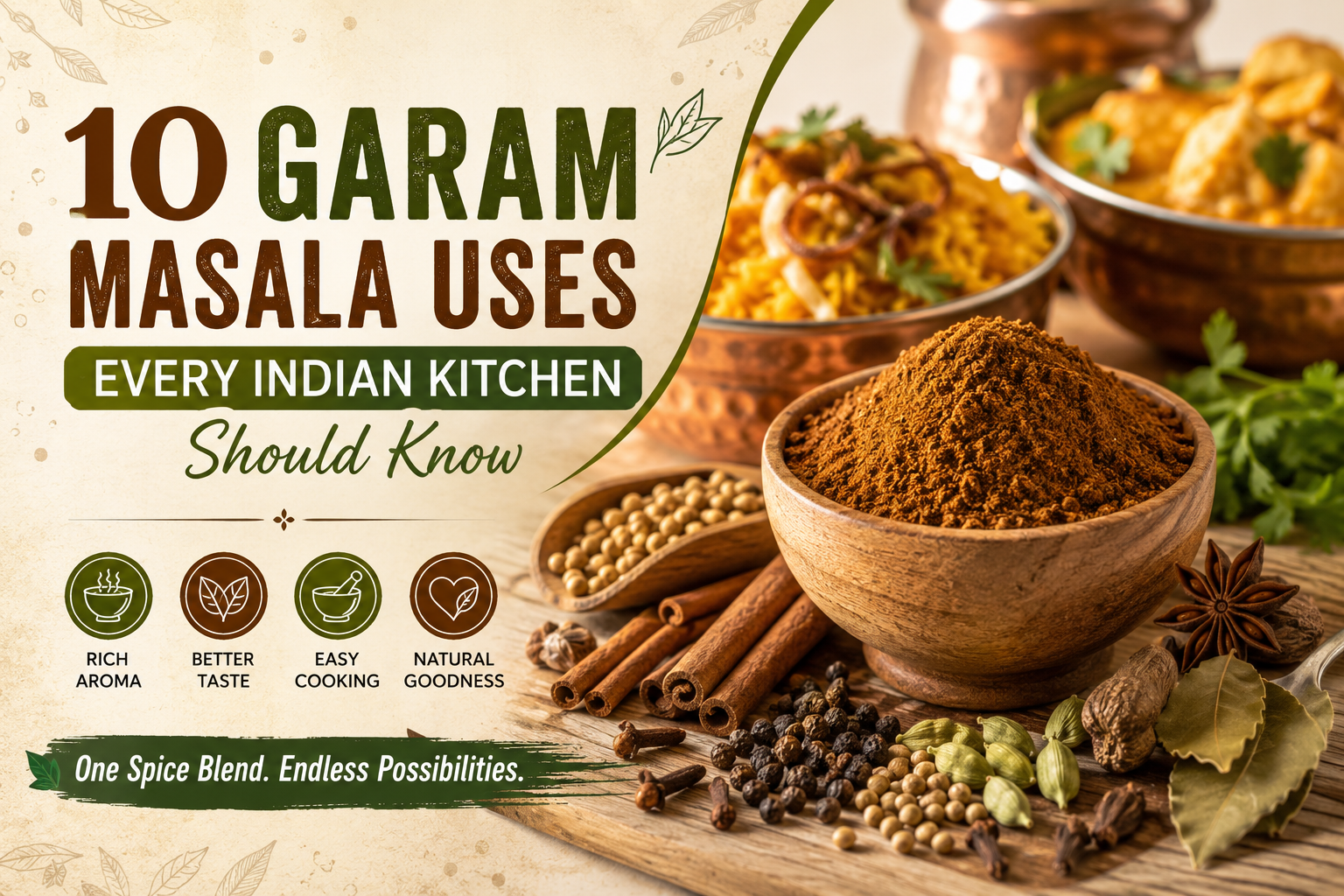
Indian cooking is incomplete without the warm, comforting aroma of garam masala uses. Whether you’re preparing a simple dal for your family or a festive biryani for guests, this iconic spice blend can instantly transform an ordinary meal into something unforgettable.
But did you know that garam masala uses go far beyond curries? From soups and snacks to marinades and even roasted vegetables, this traditional spice mix has earned its place as one of the most versatile ingredients in every Indian kitchen.
If you’ve ever wondered how to use garam masala correctly or whether adding more makes food taste better—this guide will answer all your questions.
What Are the Main Garam Masala Uses?
Garam masala is a fragrant Indian spice blend used to enhance the flavor, aroma, and depth of dishes. It is commonly added to curries, gravies, biryanis, dals, vegetables, marinades, snacks, and soups. For the best taste, it is usually added towards the end of cooking to preserve its aromatic essential oils.
Key Takeaways
- Garam masala is a blend of aromatic whole spices.
- It enhances both vegetarian and non-vegetarian dishes.
- Adding it at the end of cooking preserves maximum aroma.
- It offers antioxidant-rich spices that contribute to overall wellness.
- A small quantity delivers big flavor, more isn’t always better.
- High-quality freshly ground garam masala provides superior taste.
What Is Garam Masala?
Garam masala is a traditional Indian spice blend made by roasting and grinding whole spices such as:
- Coriander
- Cumin
- Black pepper
- Cardamom
- Cloves
- Cinnamon
- Bay leaves
- Nutmeg
- Mace
Interestingly, the word “garam” doesn’t mean the spice blend is spicy. In Ayurveda, it refers to spices believed to produce a warming effect within the body.
Every region and often every family has its own unique recipe, making garam masala uses one of India’s most treasured culinary traditions.
Why Is Garam Masala So Popular?
The secret lies in balance.
Instead of one spice dominating the dish, garam masala combines multiple spices that complement each other beautifully.
It adds:
- Rich aroma
- Warm earthy flavor
- Mild sweetness
- Subtle heat
- Complex depth
Professional chefs often describe garam masala uses as the “finishing touch” that completes an Indian dish.
10 Best Garam Masala Uses in Indian Cooking
1. Enhances Everyday Curries
This is the most common use.
Whether you’re making:
- Paneer Butter Masala
- Chole
- Rajma
- Chicken Curry
- Egg Curry
- Mutton Curry
a small sprinkle of garam masala near the end instantly elevates the flavor.
Quick Tip: Add only ½ to 1 teaspoon after switching off the flame for maximum aroma.
2. Makes Biryani More Aromatic
No authentic biryani feels complete without garam masala.
It blends beautifully with:
- Basmati rice
- Caramelized onions
- Mint
- Coriander leaves
- Yogurt marinades
The result is a restaurant-style fragrance that fills the kitchen.
3. Improves Dal and Lentil Recipes
Simple dals become more flavorful with just a pinch.
Works wonderfully in:
- Dal Tadka
- Dal Fry
- Dal Makhani
- Moong Dal
- Masoor Dal
Many home cooks add garam masala just before serving for an extra burst of aroma.
4. Elevates Dry Vegetable Dishes
Dry sabzis sometimes taste flat.
Adding garam masala enhances dishes like:
- Aloo Gobi
- Bhindi Fry
- Mixed Vegetable Curry
- Cabbage Stir Fry
- Mushroom Masala
It gives vegetables a richer and more satisfying taste.
5. Perfect for Marinades
Before grilling or roasting:
Mix garam masala with:
- Curd
- Ginger-garlic paste
- Lemon juice
- Red chilli powder
- Turmeric
This helps create deeply flavored:
- Chicken Tikka
- Paneer Tikka
- Fish Fry
- Tandoori Vegetables
6. Adds Flavor to Snacks
Many Indian snacks become more exciting with a pinch of garam masala.
Examples include:
- Samosa filling
- Aloo Tikki
- Chaat
- Masala Peanuts
- Cutlets
- Pakoras
It adds warmth without making snacks overly spicy.
7. Enhances Soups
Fusion cooking has made garam masala popular in soups.
It works well in:
- Tomato Soup
- Pumpkin Soup
- Lentil Soup
- Mixed Vegetable Soup
A tiny amount gives soups a comforting Indian twist.
8. Makes Rice Dishes More Flavorful
Besides biryani, garam masala is excellent in:
- Vegetable Pulao
- Jeera Rice
- Fried Rice
- Khichdi
It adds subtle complexity without overpowering the ingredients.
9. Boosts Stuffed Vegetables
Stuffed vegetables benefit greatly from aromatic spices.
Try adding garam masala to:
- Stuffed Brinjal
- Stuffed Capsicum
- Stuffed Bitter Gourd
- Stuffed Tomatoes
The filling becomes richer and more satisfying.
10. Finishing Seasoning
Professional chefs rarely cook garam masala for long periods.
Instead, they sprinkle it:
- Before serving
- After tempering
- During final mixing
This preserves the delicate essential oils responsible for its signature aroma.
Garam Masala Uses at a Glance
| Dish | Best Time to Add | Recommended Quantity |
|---|---|---|
| Curry | End of cooking | ½ tsp |
| Dal | Before serving | ¼–½ tsp |
| Biryani | Final layering | ½ tsp |
| Sabzi | Last 2 minutes | ¼ tsp |
| Marinade | Before cooking | 1 tsp |
| Soup | Final seasoning | Pinch |
Garam Masala Benefits
Besides flavor, many spices used in garam masala contain naturally occurring plant compounds that have been widely studied for their nutritional properties.
Potential garam masala benefits include:
Rich in Antioxidants
Spices like cloves, cinnamon, and black pepper contain antioxidants that help protect cells from oxidative stress.
Supports Digestion
Traditional Indian cooking often includes cumin, coriander, and black pepper, which are commonly used to support healthy digestion.
Adds Flavor Without Excess Salt
Using aromatic spices helps reduce dependence on extra salt while maintaining delicious taste.
Encourages Home Cooking
Flavorful homemade meals often contain fewer preservatives and unhealthy fats compared to many processed foods.
Note: Garam masala is a seasoning, not a medicine. Its health value comes as part of a balanced diet.
When Should You Add Garam Masala?
Best Practice: Add it towards the end of cooking.
Why?
High heat can reduce the delicate aroma of volatile spice oils.
Adding it during the final few minutes keeps the fragrance intact.
Common Mistakes to Avoid
Adding Too Much
More isn’t always better.
Excess garam masala can overpower other ingredients.
Cooking It for Too Long
Long cooking reduces aroma significantly.
Using Old Spice Powder
Freshly ground spices provide stronger flavor and aroma.
Ignoring Storage
Store garam masala in:
- Airtight containers
- Cool place
- Away from sunlight
- Away from moisture
Homemade vs Store-Bought Garam Masala
| Feature | Homemade | Premium Store-Bought |
|---|---|---|
| Freshness | Excellent | Very Good |
| Convenience | Low | High |
| Consistency | Varies | Consistent |
| Shelf Life | Shorter | Longer |
| Time Required | High | None |
A trusted, freshly packed premium garam masala offers an excellent balance of convenience and authentic taste.
How Much Garam Masala Should You Use?
| Servings | Quantity |
|---|---|
| 2 People | ¼ tsp |
| 4 People | ½ tsp |
| 6 People | ¾ tsp |
| 8 People | 1 tsp |
Always taste before adding more.
Expert Cooking Tips
- Dry roast whole spices before grinding.
- Use fresh batches every few months.
- Add after simmering.
- Pair with fresh coriander leaves.
- Avoid reheating dishes repeatedly.
- Combine with ginger and garlic for richer gravies.
People Also Ask
Can garam masala be used every day?
Yes. When used in normal cooking quantities, garam masala is commonly included in everyday Indian meals as a seasoning.
Is garam masala spicy?
Not necessarily. It is primarily aromatic rather than hot. Its flavor is warm, earthy, and slightly sweet.
Can I add garam masala at the beginning?
It is better to add it near the end of cooking to preserve its aroma.
Does garam masala expire?
While it may not spoil quickly if stored properly, its flavor and aroma gradually diminish over time. Fresh spice blends offer the best culinary experience.
Frequently Asked Questions
What is garam masala used for?
Garam masala is used to enhance the aroma and flavor of curries, dals, biryanis, rice dishes, vegetables, marinades, soups, and Indian snacks.
What are the benefits of garam masala?
Garam masala contains aromatic spices that provide antioxidants, support digestion as part of traditional diets, and add flavor without relying heavily on salt.
When should I add garam masala while cooking?
For the best aroma and taste, add garam masala during the last few minutes of cooking or just before serving.
Can garam masala be added to vegetables?
Yes. It enhances the flavor of dry vegetable dishes such as aloo gobi, bhindi, cabbage, mushroom, and mixed vegetable curry.
Is garam masala healthy?
In moderation, garam masala can be part of a balanced diet. It is made from spices traditionally valued for their flavor and naturally occurring beneficial plant compounds.
Can I use garam masala in soups?
Yes. A small pinch added at the end of cooking gives soups a warm Indian flavor.
Conclusion
Garam masala is far more than just another spice sitting on your kitchen shelf. It’s a carefully balanced blend that brings warmth, aroma, and depth to countless Indian recipes. Whether you’re preparing a comforting family meal or experimenting with new dishes, understanding the right garam masala uses can make a noticeable difference in flavor.
Choosing a fresh, high-quality garam masala ensures every meal captures the authentic taste of traditional Indian cooking. From everyday dals to festive biryanis, this versatile spice blend deserves a permanent place in every home kitchen.
Looking for authentic, freshly packed garam masala? Explore Annai Foods’ premium spice collection and bring rich, traditional flavors to your everyday cooking.
Do follow us on Instagram – Annai Food product2


Log in
By continuing, you accept the Website Regulations , Regulations for the sale of alcoholic beverages and the Privacy Policy
You dont have an account yet? Register Now