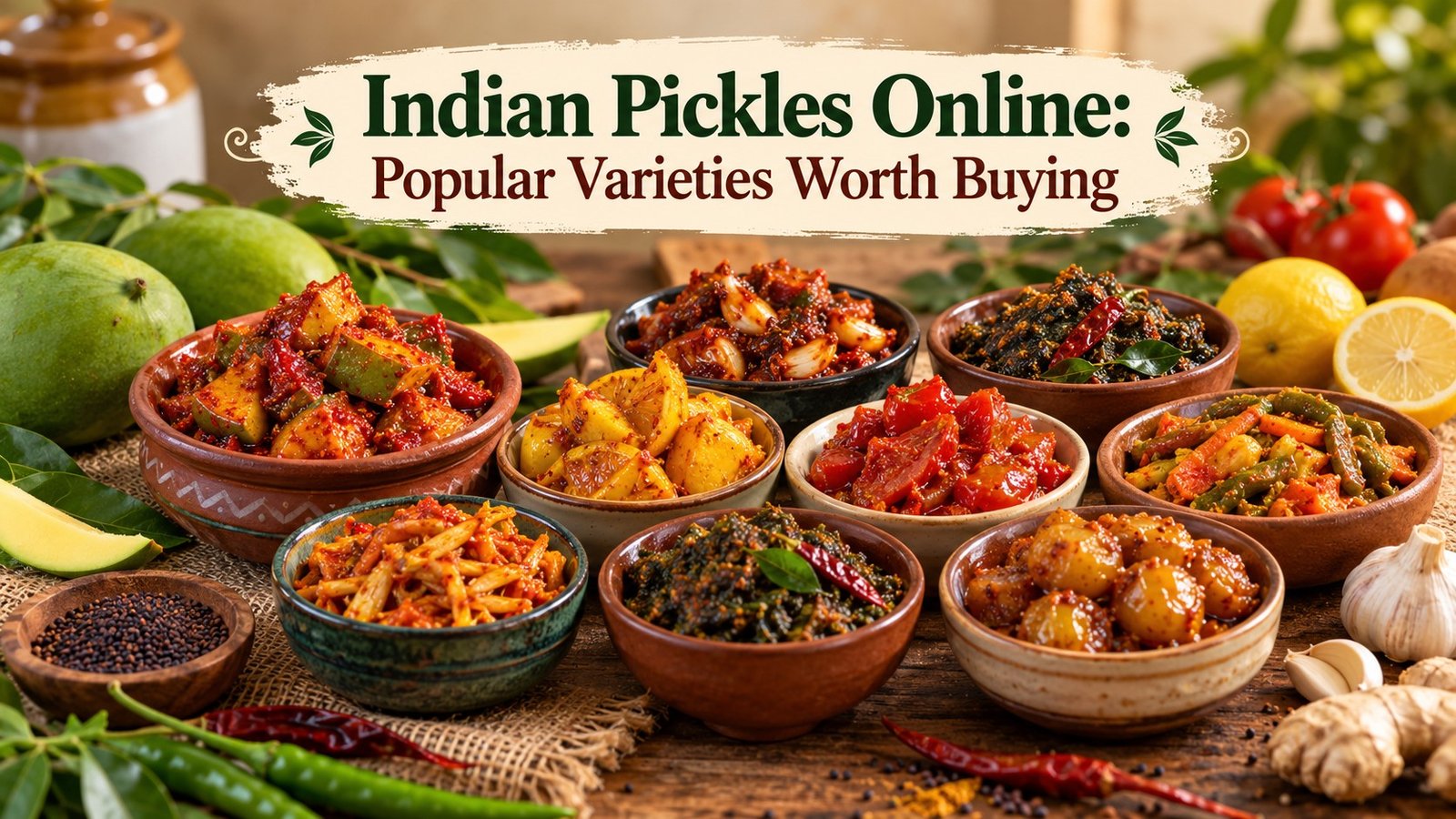
Indian Pickles Online: 10 Popular Varieties Worth Buying
Indian meals have a special way of feeling incomplete without that little spoonful of pickle on the side. Whether it is a plate of curd rice on a hot afternoon, steaming idlis for breakfast, or a comforting serving of dal and rice, the right pickle can turn a simple meal into something memorable.
Today, finding Indian pickles online makes it easier to explore regional flavours without visiting a speciality store. From tangy mango and lemon pickles to spicy garlic and mixed vegetable varieties, there is something for almost every palate.
Quick answer: Popular Indian pickles worth buying online include mango pickle, lemon pickle, garlic pickle, mixed vegetable pickle, tomato pickle, gooseberry pickle, chilli pickle, ginger pickle, gongura pickle and traditional lime pickle. Choose according to your preferred spice level, main ingredients, oil content, preparation style and the meals you enjoy.
But how do you decide which variety to buy? Let’s explore the flavours, regional differences and practical shopping tips that can help you choose the right pickle for your kitchen.
Key Takeaways
- Mango pickles online is a classic choice for tangy, spicy flavours.
- Lemon and lime pickles online offer a citrusy taste that pairs well with rice and curd rice.
- Garlic and chilli pickles online suit people who enjoy stronger, more intense flavours.
- Mixed vegetable pickles online combine different vegetables for a varied texture.
- Regional pickles online, such as Andhra gongura pickle, offer distinctive local tastes.
- Before buying pickles online, check the ingredient list, net weight, manufacturing date, storage instructions and packaging.
- Pickles are generally high in salt, so enjoy them in moderation as a side dish.
Why Are Indian Pickles Online So Popular?
Indian pickles, also known as achar, are preserved or seasoned preparations made using ingredients such as fruits, vegetables, salt, spices, oil and, in some varieties, vinegar or other acidic ingredients.
Their appeal comes from the combination of flavours. Depending on the recipe, a pickle can be sour, salty, spicy, mildly sweet or a mixture of all four. Regional traditions also influence the ingredients, spice blends and preparation methods.
For instance, a traditional Andhra-style mango pickle may feature bold chilli heat, while a lemon pickle can develop a deeper, more rounded flavour as the citrus peel softens during preparation.
Pickles also offer practical value. A small serving can add variety to a meal without requiring another cooked dish. That is one reason many Indian households keep at least one favourite pickle ready in the kitchen.
10 Popular Indian Pickles Online Worth Buying
1. Mango Pickles online – A Classic Indian Favourite
Mango pickle is one of the most recognisable varieties of Indian achar. It is usually made with raw mango pieces, salt, chilli powder, mustard and other spices. Depending on the regional recipe, oil and additional seasonings may also be used.
The combination of firm mango pieces, sourness and spice makes this pickle a popular accompaniment to rice, curd rice, dal, chapati and paratha.
Best for: People who enjoy traditional, tangy and spicy flavours.
What to check before buying: Look at the ingredient list, mango-piece size, oil content and spice level. Regional styles can differ significantly, so check the product description rather than assuming every mango pickle tastes the same.
2. Lemon Pickles online – Tangy and Full of Character
Lemon pickle is prepared using lemons, salt and spices, with recipes varying in their use of chilli, oil and other ingredients. Some versions are sharp and salty, while others develop a more mellow, rounded taste.
It pairs particularly well with curd rice, plain rice, paratha and simple homemade meals.
Best for: People who prefer citrus-based pickles with a balance of sourness and seasoning.
Buying tip: Check whether the product uses whole lemons or lemon pieces and whether the flavour profile is described as spicy, mild or sweet-and-sour.
3. Garlic Pickles online – Bold, Spicy and Aromatic
Garlic pickle brings a distinctive aroma and a strong savoury flavour to the table. Garlic cloves are combined with spices and, depending on the recipe, oil or other preserving ingredients.
It can be a good match for curd rice, dal rice, chapati and other simple meals that benefit from a more intense accompaniment.
Best for: Garlic lovers who enjoy bold, savoury flavours.
Buying tip: Check whether the garlic is described as whole, sliced or crushed. If you prefer a milder taste, look for a product that clearly mentions its spice level.
4. Mixed Vegetable Pickles online – Variety in Every Spoonful
Mixed vegetable pickle combines two or more vegetables in a seasoned preparation. Depending on the recipe, it may include carrots, green chillies, mango, lime or other vegetables.
This variety can offer a combination of textures and flavours in one jar. It is useful for households that enjoy variety but do not want to buy several separate pickles.
Best for: People who like different textures and a combination of tangy and spicy ingredients.
Buying tip: Read the ingredient list to see which vegetables are included. The name “mixed vegetable pickle” does not guarantee the same combination across brands.
5. Tomato Pickles online – A Tangy South Indian Option
Tomato pickle is particularly familiar in South Indian food traditions. Tomatoes are cooked or otherwise prepared with spices to create a concentrated, tangy accompaniment. The exact texture and preparation method vary by recipe.
Tomato pickle can pair well with idli, dosa, chapati and rice. Its softer texture can also make it convenient to spread or mix into a meal.
Best for: People who enjoy tomato-based flavours and a softer pickle texture.
Buying tip: Check the product description for chilli intensity, oil content and recommended storage after opening.
6. Gooseberry Pickles online – A Distinctive Traditional Choice
Gooseberry pickle, often called amla pickle, is made using Indian gooseberries seasoned with salt and spices. The fruit has a naturally tart flavour, giving the pickle a character different from mango or lemon varieties.
It can be enjoyed with rice, curd rice and simple Indian meals.
Best for: People looking for a fruit-based pickle with a pronounced sour taste.
Buying tip: Check the preparation style and ingredient list. Gooseberry pickle is not automatically low in salt or a health food simply because it contains fruit.
7. Chilli Pickles online – For Those Who Enjoy Heat
Chilli pickle is made using green or other chillies, depending on the regional recipe. Ingredients such as mustard, spices, salt, oil and acidic seasonings may be used to create a sharp, spicy flavour.
Some versions are intensely hot, while others balance chilli heat with sourness.
Best for: People who prefer spicy accompaniments and enjoy a noticeable chilli kick.
Buying tip: Look for a clearly described spice level and check the type of chilli used when this information is available.
8. Ginger Pickles online – A Sharp and Spicy Accompaniment
Ginger pickle uses fresh ginger as its central ingredient, combining its naturally pungent flavour with spices and other seasonings. Depending on the recipe, it may have a strong sour, spicy or slightly sweet profile.
It can complement curd rice, dosa, idli and other dishes where a small amount of concentrated flavour is welcome.
Best for: People who enjoy the distinctive taste of ginger.
Buying tip: Review the ingredients to understand whether the recipe includes tamarind, jaggery, vinegar or other seasonings that influence the final taste.
9. Gongura Pickles online – A Recognisable Andhra Speciality
Gongura is a leafy green ingredient widely associated with Andhra cuisine. Its naturally sour character makes it suitable for bold, flavourful preparations, including gongura pickle.
Unlike fruit-based pickles, gongura pickle has a leafy, tangy flavour that stands apart from mango, lemon and garlic varieties. It is often served with rice and traditional South Indian meals.
Best for: People who enjoy regional Andhra flavours and pronounced sourness.
Buying tip: Check whether the product is a gongura pickle or another gongura-based condiment, and review the spice level before ordering.
10. Traditional Lime Pickle – A Citrus-Based Pantry Staple
Lime pickle is another popular citrus-based variety. Although lemon and lime pickles are sometimes used interchangeably in casual conversation, the fruit, recipe and resulting flavour can differ.
Traditional lime pickle may combine citrus pieces with salt and spices. Some preparations develop a softer texture and deeper flavour over time.
Best for: People who enjoy citrus-forward accompaniments with rice, paratha and other everyday dishes.
Buying tip: Confirm the main ingredient, preparation style and storage directions instead of relying on the product name alone.
Indian Pickle Varieties Compared
Choosing a pickle becomes easier when you compare its main flavour and the foods it complements.
| Pickle variety | Typical flavour | Pairs well with |
|---|---|---|
| Mango | Tangy, spicy | Rice, curd rice, paratha |
| Lemon | Sour, salty, spicy | Rice, curd rice, chapati |
| Garlic | Bold, savoury, spicy | Dal rice, chapati, curd rice |
| Mixed vegetable | Tangy, spicy, varied texture | Rice, roti, everyday meals |
| Tomato | Tangy, savoury | Idli, dosa, rice |
| Gooseberry | Tart, salty, spicy | Rice, curd rice |
| Chilli | Hot, sharp, spicy | Rice, paratha, simple meals |
| Ginger | Pungent, tangy, spicy | Idli, dosa, rice |
| Gongura | Distinctively sour, savoury | Rice, traditional Andhra meals |
| Lime | Citrus-forward, sour, salty | Rice, chapati, paratha |
Note: These are typical flavour profiles, not fixed standards. Actual taste depends on the recipe, ingredients and preparation method.
How to Choose the Right Indian Pickles Online
Shopping online gives you access to a wider selection, but product names alone do not tell you everything about taste or quality. Use these practical checks before placing an order.
1. Choose a flavour that suits your meals
Think about when you are most likely to eat the pickle.
- For everyday rice meals, consider mango, lemon or garlic pickle.
- For idli and dosa, tomato or ginger pickle may be worth exploring.
- For a regional flavour, consider gongura pickle.
- For a more varied texture, look at mixed vegetable pickle.
- For a sharper, spicy accompaniment, consider chilli pickle.
These are starting points rather than strict rules. You can pair different varieties with different foods according to your taste.
2. Read the ingredient list carefully
Check the ingredients for the main fruit or vegetable, salt, spices, oil and any additional preserving ingredients. If you have food allergies or dietary restrictions, review the full ingredient and allergen information before buying.
Do not assume that a product labelled “traditional,” “homemade-style” or “natural” has a particular ingredient profile. Verify the details on the label.
3. Check the manufacturing date and shelf life
Pickles can have different shelf lives depending on their formulation, processing, packaging and storage conditions.
Before ordering, check the manufacturing or packing date where available, best-before information and storage instructions. If the product requires refrigeration after opening, make sure you can follow that guidance.
4. Compare the quantity and price
A larger jar may appear more economical, but it is only good value if you can use the contents appropriately before quality deteriorates.
Compare the net quantity and price per 100 g rather than looking only at the total price. Also check delivery charges, minimum-order requirements and any bundle offers.
5. Check packaging and delivery details
Pickles may be sold in glass jars, food-grade plastic containers or pouches. Each format has practical considerations involving weight, handling and storage.
Look for securely sealed packaging and clear product information. Check whether the seller explains how the product is packed for delivery and what to do if the package arrives damaged or leaking.
6. Review the seller’s product information
A useful product page should clearly explain:
- The pickle variety and main ingredients
- Net weight
- Spice level or flavour profile, where available
- Manufacturing and best-before details
- Storage instructions
- Price and delivery terms
- Customer support or return policies
Detailed product information helps you make an informed choice and reduces the risk of ordering a variety that does not match your expectations.
Homemade-Style Pickles vs. Commercially Packaged Pickles
Many shoppers look for homemade-style pickles because they associate them with traditional flavours. However, the phrase does not automatically establish how a product was made or how it compares with another pickle.
| Factor | Homemade preparation | Commercially packaged product |
|---|---|---|
| Recipe | Can be adjusted to personal taste | Usually follows the producer’s formulation |
| Availability | Depends on preparation time and ingredients | Can be ordered when the product is in stock |
| Consistency | May vary between batches | Intended to offer consistency, although variation can occur |
| Ingredient information | You know what you add | Check the product label |
| Storage | Depends on the recipe and handling | Follow the manufacturer’s directions |
| Convenience | Requires preparation and proper storage | Ready to serve when opened |
Neither category is automatically superior. A well-prepared homemade pickle requires appropriate hygiene and preservation practices. A packaged pickle should be evaluated through its ingredients, manufacturing information, packaging and storage guidance.
If traditional flavour is your priority, look for a seller that provides a clear description of its preparation style and ingredients rather than relying on marketing language alone.
Are Indian Pickles Healthy?
Indian pickles can add flavour and variety to meals, but they should generally be treated as a condiment rather than a major source of nutrition.
Salt is an important ingredient in many pickle recipes. Some varieties also contain considerable amounts of oil or added sugar, depending on how they are prepared. As a result, nutritional values can differ substantially between products.
For a more informed choice:
- Check the sodium or salt information on the nutrition label.
- Pay attention to serving size.
- Compare added sugar and oil when these details are available.
- Follow any dietary advice you have received from a qualified healthcare professional.
- Store the product according to the manufacturer’s instructions.
A pickle made with fruit or vegetables is not automatically low in sodium, and traditional preparation does not guarantee a particular nutritional profile.
How Should You Store Pickles After Opening?
Correct storage helps maintain pickle quality and reduces the risk of spoilage.
- Follow the label first. Some products require refrigeration after opening, while others have different storage instructions.
- Use a clean, dry spoon. Avoid introducing water, food particles or moisture into the container.
- Close the lid securely. This limits unnecessary exposure to air and contamination.
- Avoid storing the jar in unsuitable conditions. Keep it away from direct sunlight and heat unless the manufacturer specifies otherwise.
- Look for signs of spoilage. Unexpected mould, unusual odours, a damaged seal or other abnormal changes are reasons not to consume the product.
Do not assume that a pickle is safe indefinitely because it contains salt, oil or spices. If the product looks or smells unusual, do not taste it to check whether it is safe.
Why Buy Indian Pickles Online Instead of Visiting a Store?
Buying pickles online can be useful when you want to explore varieties that are not readily available at your local shop.
Here are some practical advantages:
- More choice: Explore different fruit, vegetable and regional varieties in one place.
- Convenience: Order from home without making a separate shopping trip.
- Product details: Compare ingredients, quantities, prices and storage instructions before purchasing.
- Easy replenishment: Reorder a favourite variety when you run out.
- Gift and combo options: Some sellers offer assorted pickle combinations that make it easier to sample several flavours.
However, online shopping works best when the seller provides reliable product information and appropriate packaging. Check delivery terms and the condition of the package when it arrives.
Frequently Asked Questions About Indian Pickles Online
Which Indian pickle is best for everyday meals?
Mango, lemon and garlic pickles are familiar options for everyday Indian meals. Mango pickle works well with rice and paratha, lemon pickle complements curd rice, and garlic pickle adds a stronger savoury flavour. The best choice depends on your preferred spice level and the dishes you eat most often.
Which Indian pickles go well with curd rice?
Mango, lemon, lime and garlic pickles are common accompaniments to curd rice. Their tangy, salty or spicy flavours contrast with the mild taste of curd rice. Start with a small serving if you are trying a new variety.
Can I buy traditional South Indian pickles online?
Yes. Online stores may offer South Indian varieties such as mango, lemon, tomato, garlic and gongura pickle. Availability varies by seller, so check the product catalogue, ingredients, regional style and delivery options before ordering.
What should I check before buying pickles online?
Check the main ingredients, net quantity, price, manufacturing or packing date, best-before information, storage instructions and packaging details. If you have allergies or dietary restrictions, review the ingredient and allergen information before placing an order.
How long do Indian pickles last after opening?
There is no single shelf-life rule for all Indian pickles. Storage life depends on the ingredients, preparation, processing, packaging and handling. Follow the manufacturer’s best-before date and after-opening storage instructions rather than assuming all pickles last for the same period.
Are homemade-style pickles better than packaged pickles?
Not necessarily. Homemade-style pickles may appeal to people who enjoy traditional flavours, while packaged pickles offer convenience and product labelling. Compare ingredients, preparation details, hygiene, packaging and storage guidance instead of judging quality by the label alone.
Are all Indian pickles very spicy?
No. Some pickles are intensely spicy, while others are mainly sour, salty or mildly sweet. Mango, lemon, garlic, gooseberry and mixed vegetable pickles can all vary in heat depending on the recipe. Check the product description and ingredient list for clues about the spice level.
How can I choose a pickle as a gift?
An assorted pickle pack can be a practical gift for someone who enjoys Indian food. If you do not know the recipient’s preferences, choose a selection with different flavour profiles and clearly labelled ingredients. Also consider packaging, shelf life and delivery timing.
Final Thoughts: Find Your Favourite Indian Pickle Online
Indian pickles bring together regional traditions, distinctive ingredients and flavours that complement everyday meals. Whether you prefer the familiar tang of mango pickle, the citrus notes of lemon pickle or the bold taste of garlic and gongura, trying different varieties can help you discover new favourites.
When shopping for Indian pickles online, look beyond the product name. Compare the ingredients, flavour profile, quantity, packaging and storage instructions so you know what you are buying.
If you are exploring traditional pickles for your home, start with a familiar variety and then try something new. A carefully chosen pickle can be a simple way to add a little more character to your everyday meals.


Log in
By continuing, you accept the Website Regulations , Regulations for the sale of alcoholic beverages and the Privacy Policy
You dont have an account yet? Register Now