Shikakai vs Shampoo: Which Is Better for Your Hair?
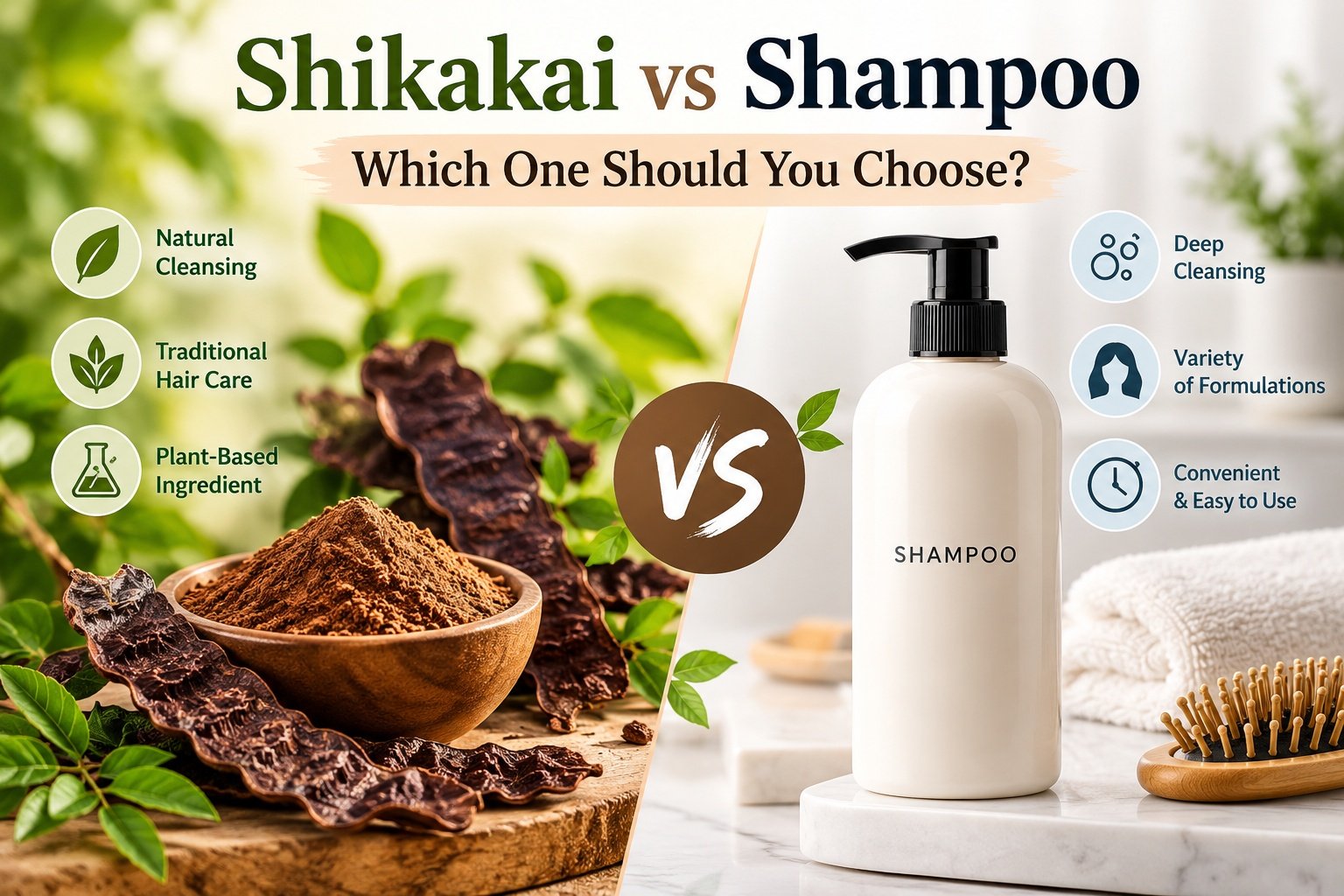
Have you ever wondered whether your hair really needs a bottle of shampoo every time you wash it? Long before modern shampoos became household essentials, Indian families relied on traditional ingredients such as shikakai to cleanse their hair.
Today, many people are rediscovering these traditional hair care practices. Some prefer shikakai because it is plant-based, while others choose shampoo for its convenience, cleansing performance, and targeted formulations.
But which option is actually better for your hair?
The answer depends on your scalp condition, hair texture, washing routine, and personal preferences. Understanding the differences between shikakai and shampoo can help you choose a hair cleansing method that fits your needs.
Is Shikakai Better Than Shampoo?
Shikakai can be a good choice if you prefer traditional, plant-based hair cleansing, while shampoo is often more convenient for removing excess oil, sweat, and product buildup. Neither option is automatically better for everyone. Your hair type, scalp condition, and cleansing needs should determine your choice.
If you have dandruff or a persistent scalp condition, a suitable medicated shampoo may be more appropriate than shikakai alone.
Key Takeaways
- Shikakai is a traditional plant-based hair cleanser used in Indian hair care.
- Shikakai pods contain saponins, naturally occurring compounds that help with cleansing.
- Shampoo offers different formulations for oily scalps, dry hair, dandruff, and other specific needs.
- Shikakai is not a proven treatment for hair loss or a guaranteed way to promote hair growth.
- Both shikakai and shampoo can cause irritation or dryness in some people.
- Your hair type, scalp condition, and lifestyle matter more than whether a product is labelled natural or chemical-free.
- You can incorporate shikakai into your routine without necessarily abandoning shampoo completely.
What Is Shikakai?
Shikakai, scientifically known as Acacia concinna, is a climbing shrub traditionally used in Indian hair care. Its pods have long been used to prepare natural hair cleansers, particularly in southern and central India.
The name is widely associated with traditional methods of washing hair using plant-based ingredients rather than commercially formulated cleansing products.
One reason shikakai is useful for cleansing is its natural saponin content. Saponins are plant compounds that can help loosen dirt and oils when mixed with water.
Shikakai is commonly available in several forms:
- Shikakai powder: Dried pods ground into a powder for preparing a hair cleansing paste.
- Dried shikakai pods: Traditionally soaked, boiled, or otherwise prepared before use.
- Shikakai-based shampoo: A formulated cleansing product containing shikakai alongside other ingredients.
These forms are not necessarily interchangeable. A homemade shikakai paste, for example, behaves differently from a commercially formulated shampoo containing shikakai extract.
How Does Shikakai Clean Hair?
Shikakai contains naturally occurring saponins that contribute to its cleansing properties.
When prepared with water and massaged gently onto the scalp and hair, shikakai can help remove some surface oil and dirt. However, its cleansing performance depends on the preparation, concentration, water quality, and amount of oil or styling product present.
Unlike a conventional shampoo, homemade shikakai preparations do not necessarily contain conditioning agents or ingredients designed to address specific scalp problems.
An important distinction: Traditional use supports shikakai’s role as a hair cleanser, but it does not establish that shikakai prevents hair loss, reverses greying, or stimulates new hair growth.
What Is Shampoo and How Does It Work?
Shampoo is a hair cleansing product formulated to remove excess sebum, sweat, dirt, dead skin cells, and product residue from the scalp and hair.
Most shampoos use surfactants, which help loosen and disperse oils and dirt so they can be rinsed away with water.
Modern shampoos come in different formulations depending on their intended purpose.
| Shampoo Type | Main Purpose | Suitable For |
|---|---|---|
| Clarifying shampoo | Removes substantial product buildup and excess residue | People who regularly use styling products |
| Moisturising shampoo | Cleanses while helping reduce the feeling of dryness | Dry or coarse hair |
| Gentle shampoo | Provides everyday cleansing with a formulation suited to regular use | People who prefer milder cleansing |
| Volumising shampoo | Cleanses without adding as much of a heavy, conditioning feel | Fine or limp hair |
| Anti-dandruff shampoo | Helps manage dandruff using specific active ingredients | People experiencing dandruff |
| Colour-protecting shampoo | Formulated to help care for colour-treated hair | People who colour their hair |
| Shikakai-based shampoo | Combines shikakai with other cleansing or conditioning ingredients | People interested in herbal-inspired hair care |
The important point is that shampoo is not a single type of product.
A strong clarifying shampoo and a gentle moisturising shampoo can produce very different results. Therefore, comparing shikakai with shampoo requires looking at the particular shampoo being used.
Shikakai vs Shampoo: What’s the Difference?
The biggest difference is how each option is prepared, formulated, and used.
Shikakai is a plant-based ingredient traditionally prepared as a cleanser. Shampoo is a finished product designed to deliver a particular cleansing experience.
Here is a closer comparison.
| Feature | Shikakai | Conventional Shampoo |
|---|---|---|
| Source | Plant-derived ingredient | Formulated using selected cleansing and supporting ingredients |
| Cleansing action | Natural saponins contribute to cleansing | Surfactants help remove oil, dirt, and residue |
| Preparation | Powder or pods may need preparation | Usually ready to use |
| Convenience | Requires preparation and thorough rinsing | Generally quick and convenient |
| Cleansing strength | Depends on preparation and concentration | Varies according to the formulation |
| Fragrance | Usually mild or characteristic of the plant unless blended | May contain fragrance or be fragrance-free |
| Conditioning | Does not automatically provide conditioning benefits | Some formulations include conditioning ingredients |
| Dandruff management | Not a substitute for proven dandruff treatments | Specific medicated shampoos can help manage dandruff |
| Product buildup | May remove some surface dirt and oil | Some shampoos are specifically formulated to remove buildup |
| Suitability for sensitive scalps | May still cause irritation in susceptible individuals | Depends on the formula and individual tolerance |
| Storage | Homemade mixtures may spoil if stored improperly | Commercial products generally have defined storage instructions |
| Environmental considerations | May involve minimal packaging when bought in bulk | Depends on packaging, formulation, and manufacturing |
| Best use | Traditional hair cleansing when suitable for the individual | Routine cleansing and specific hair or scalp needs |
The verdict: Shikakai offers a traditional cleansing option, while shampoo provides greater choice and convenience. The better option depends on what your scalp and hair actually need.
What Are the Benefits of Using Shikakai for Hair?
Shikakai has a long history in traditional Indian hair care. Its practical benefits are mainly related to its role as a plant-based cleansing ingredient.
Let’s look at what it may offer.
1. Provides Plant-Based Cleansing
Shikakai contains natural saponins that help loosen surface oil and dirt.
For people who enjoy preparing traditional hair care products, shikakai powder can be an alternative to a ready-made shampoo.
However, the cleansing result may vary depending on how much powder is used, how it is prepared, and how much oil is present on the scalp.
2. Fits Traditional Indian Hair Care Routines
Shikakai is often used alongside ingredients such as amla and reetha in traditional hair cleansing preparations.
These ingredients have different properties and should not be treated as identical.
- Shikakai: Traditionally used for hair cleansing.
- Reetha: Contains saponins and is traditionally used as a cleansing ingredient.
- Amla: Traditionally incorporated into hair and scalp care preparations.
Some people combine these ingredients to create a herbal hair wash.
However, combining more ingredients does not automatically make a preparation more effective or suitable for every scalp.
3. Offers an Alternative to Ready-Made Cleansers
If you prefer preparing your own hair care products, shikakai gives you greater control over the basic ingredients you use.
This may appeal to people who enjoy traditional routines or want to experiment with plant-based cleansing.
Keep in mind that homemade preparations do not offer the same standardisation as properly formulated commercial products. Their strength, consistency, and shelf life may vary.
4. May Suit Some People Who Prefer Simple Hair Care
Some people find that a simple cleansing routine works well for their hair.
If your scalp tolerates shikakai and your hair feels clean afterward, it may have a place in your routine.
Still, a natural ingredient is not automatically gentler than a formulated shampoo. Individual sensitivity, preparation, and frequency of use all matter.
What Shikakai Cannot Guarantee
Shikakai is frequently promoted online with claims about hair growth, reduced hair fall, dandruff prevention, and stronger roots.
These claims require careful interpretation.
Although shikakai has traditional uses and relevant plant compounds, strong clinical evidence establishing it as a treatment for hair loss or a reliable hair growth stimulant is limited.
It should not replace professional assessment for persistent hair shedding, scalp inflammation, or other medical concerns.
What Are the Benefits of Using Shampoo?
Shampoo remains a practical choice because different formulations can address different cleansing requirements.
1. Removes Excess Oil and Everyday Dirt
Your scalp naturally produces sebum, an oily substance that helps lubricate the skin and hair.
However, excess sebum can mix with sweat, dirt, and styling products.
A suitable shampoo can help remove this buildup and leave the scalp feeling clean.
2. Offers Different Formulations for Different Hair Types
A person with an oily scalp may need a different product from someone with dry, curly, or colour-treated hair.
Modern shampoo formulations allow you to select products according to these differences.
For example:
- An oily scalp may benefit from a suitable shampoo used at an appropriate frequency.
- Dry hair may respond better to a gentle, moisturising formula.
- Colour-treated hair may benefit from a product formulated for coloured hair.
- People with dandruff may need a shampoo containing an appropriate active ingredient.
This flexibility is one of the biggest advantages of commercial shampoo.
3. Can Help Manage Dandruff
Shikakai should not be considered a replacement for established dandruff treatments.
Depending on the product and local availability, anti-dandruff shampoos may contain active ingredients such as ketoconazole, selenium sulfide, salicylic acid, or other ingredients used to manage flaking.
Follow the product instructions. If dandruff persists, becomes severe, or is accompanied by redness and significant itching, consult a dermatologist.
4. Is Convenient for Busy Routines
Shampoo is generally easier to use than preparing a homemade herbal cleanser.
You can apply the product, massage the scalp, and rinse it according to the instructions.
For people who wash their hair frequently, travel regularly, or use styling products, this convenience can make a meaningful difference.
Can Shampoo Damage Your Hair?
Not every shampoo damages hair. However, a product that is unsuitable for your hair or scalp may leave your hair feeling dry or cause irritation.
Frequent washing with an unsuitable formula, aggressive scrubbing, and rough handling of wet hair can also contribute to hair damage.
The solution is not necessarily to stop using shampoo. Instead, choose an appropriate formula, wash according to your needs, and use conditioner when needed.
Which Is Better for Different Hair Types?
There is no single winner for every hair type.
Your scalp produces oil, your hair retains moisture differently, and your styling routine affects how much cleansing you need.
The following guide can help you decide where to start.
| Hair or Scalp Type | Potentially Suitable Option | Why? |
|---|---|---|
| Oily scalp | Suitable shampoo | May provide more consistent cleansing of excess sebum |
| Dry hair | Gentle, moisturising shampoo or carefully selected shikakai preparation | The priority is cleansing without excessive dryness |
| Curly hair | Gentle shampoo with suitable conditioner | Helps balance scalp cleansing and hair manageability |
| Fine hair | Lightweight shampoo | Can cleanse without leaving hair feeling heavily coated |
| Thick hair | Shampoo or shikakai, depending on cleansing needs | The right choice depends on scalp oil and product buildup |
| Colour-treated hair | Shampoo formulated for colour-treated hair | Designed with colour-care needs in mind |
| Dandruff-prone scalp | Appropriate anti-dandruff shampoo | Specific active ingredients can help manage dandruff |
| Sensitive scalp | A well-tolerated, fragrance-free cleanser may be a useful starting point | Both plant-based and commercial products can cause reactions |
| Minimal-product hair care routine | Shikakai may be an option | Suitable if it cleanses adequately and does not irritate the scalp |
Remember that hair type and scalp type are not the same.
For example, someone may have dry, curly hair with an oily scalp. In that case, scalp cleansing and conditioning the hair lengths may require different approaches.
Dermatologists generally recommend choosing hair care products according to your hair type and adjusting washing frequency to how quickly your scalp becomes oily or dirty.
How to Use Shikakai Powder for Hair?
If you want to try shikakai, start with a simple preparation rather than mixing several ingredients at once.
This makes it easier to identify whether your scalp tolerates the product.
Step 1: Choose a Suitable Shikakai Powder
Purchase shikakai powder from a reliable seller that provides clear ingredient and storage information.
Check that the product is intended for hair care and does not contain unexpected additives.
Step 2: Prepare a Small Amount
Place a small quantity of shikakai powder in a clean bowl.
Gradually add water and mix until it forms a smooth, spreadable paste. Follow any preparation instructions supplied with the product.
Avoid making a large batch unless the manufacturer provides appropriate storage guidance.
Step 3: Test Before Applying It to Your Scalp
Test the preparation on a small area of skin first and watch for irritation.
A preliminary test cannot guarantee that a reaction will not occur, but it may help identify obvious sensitivity.
Do not use the preparation if you experience itching, burning, redness, or swelling.
Step 4: Apply Gently
Wet your hair thoroughly.
Apply the prepared mixture carefully to the scalp and hair. Massage gently with your fingertips rather than scratching with your nails.
Avoid getting the mixture into your eyes.
Step 5: Rinse Thoroughly
Rinse your hair carefully until the residue is removed.
Powder that remains in the hair can make it feel gritty or difficult to manage.
Step 6: Condition If Needed
If your hair feels dry, rough, or tangled after cleansing, use a suitable conditioner.
For many people, applying conditioner mainly to the mid-lengths and ends helps improve manageability without unnecessarily weighing down the roots.
Important: Avoid applying homemade mixtures to broken or inflamed skin. Prepare only what you need, and do not store a wet herbal paste for later use unless you have reliable preservation guidance.
Can You Use Shikakai and Shampoo Together?
Yes. You do not necessarily need to choose one and completely abandon the other.
A combined routine may suit people who enjoy traditional hair care but still need the predictable cleansing performance of a commercial shampoo.
For example, you might use shikakai occasionally when your scalp and hair tolerate it, while keeping a suitable shampoo available for days when you need more thorough cleansing.
However, avoid creating a rigid schedule without considering your scalp’s needs.
A practical approach is to:
- Use a suitable shampoo when your scalp becomes oily, sweaty, or dirty.
- Try shikakai on a separate wash day if you want to explore traditional cleansing.
- Avoid using both repeatedly in the same wash if this leaves your hair dry.
- Use conditioner when your hair needs additional moisture or detangling.
- Stop using either product if it causes irritation.
If you have dandruff or a diagnosed scalp condition, continue using the recommended treatment rather than relying on shikakai as a substitute.
Common Myths About Shikakai and Shampoo
Several popular hair care claims make it difficult to distinguish traditional knowledge from established evidence.
Let’s examine a few common misconceptions.
Myth 1: Shikakai Is Always Better Because It Is Natural
Fact: Natural ingredients can still cause irritation or allergic reactions. A suitable product depends on the individual, not just whether its ingredients are plant-derived.
Myth 2: Shampoo Always Contains Harmful Chemicals
Fact: All ingredients, including water and plant extracts, are chemicals in the scientific sense. What matters is the formulation, concentration, safety, and suitability of the product.
Myth 3: Shikakai Stops Hair Fall
Fact: There is insufficient strong clinical evidence to conclude that shikakai reliably prevents hair loss. Hair shedding can have many causes, including stress, hormonal changes, nutritional problems, and medical conditions.
Myth 4: More Foam Means Better Cleansing
Fact: Foam alone does not determine how effectively a product cleans your hair. Different cleansing agents produce different amounts of lather.
Myth 5: Everyone Should Wash Their Hair on the Same Schedule
Fact: Washing frequency depends on scalp oiliness, hair texture, activity, and product use. Some people need frequent washing, while others can wash less often.
How to Choose the Right Hair Cleanser
Before buying shikakai powder or a shampoo, ask yourself five questions.
1. What does my scalp need?
Consider whether your scalp is oily, dry, itchy, flaky, or generally comfortable.
2. How much product buildup do I have?
Hair sprays, gels, oils, and other styling products may require a cleanser suited to removing residue.
3. What is my hair texture?
Fine, straight, thick, and curly hair can respond differently to the same cleansing routine.
4. Do I have a specific scalp concern?
Persistent dandruff, inflammation, or unexplained hair loss may require professional advice rather than experimentation with home remedies.
5. How much time do I want to spend on hair care?
Shikakai preparation takes additional effort. Shampoo is generally more convenient, although both options require appropriate application and rinsing.
Your best choice is the product that cleanses your scalp effectively, leaves your hair manageable, and does not cause unwanted reactions.
Conclusion: Should You Choose Shikakai or Shampoo?
Shikakai and shampoo serve a similar basic purpose: cleansing your hair and scalp. However, they differ in preparation, formulation, convenience, and the range of needs they can address.
Shikakai may appeal to you if you enjoy traditional Indian hair care and want to explore plant-based cleansing. Shampoo may be the more practical choice if you prefer convenience, need consistent removal of excess oil, or require a formulation designed for a particular scalp concern.
You can also use both as part of a considered routine, provided your scalp tolerates them and you do not compromise necessary treatment.
The most important lesson is simple: choose your hair cleanser based on your scalp’s needs, not just the popularity of a product or whether it is labelled natural.
Looking for Shikakai for Your Hair Care Routine?
If you want to explore traditional hair care ingredients, consider adding shikakai powder to your routine after checking the product’s quality, ingredients, and intended use.
At Annai Foods, you can explore products and ingredients for your everyday household needs.
Discover products at Annai Foods and find options that fit your routine.
5. Frequently Asked Questions (FAQs)
1. Is shikakai better than shampoo?
Shikakai may be suitable for people who prefer traditional, plant-based hair cleansing. Shampoo is often more convenient and offers formulations for different hair types and scalp conditions. The better option depends on your individual needs and how your scalp responds.
2. Can I use shikakai instead of shampoo every day?
Not everyone needs to cleanse their hair daily, and daily shikakai use has not been established as the best routine for everyone. Choose a washing frequency based on scalp oiliness, activity, hair texture, and product buildup.
3. Does shikakai help with hair growth?
Shikakai is traditionally used in hair care, but strong clinical evidence that it directly stimulates hair growth is limited. Persistent hair loss should be assessed by a qualified healthcare professional.
4. Is shikakai good for dry hair?
Shikakai may be suitable for some people with dry hair, but the result depends on the preparation and individual response. If your hair becomes rough or tangled after use, consider a gentler cleansing method and a suitable conditioner.
5. Can shikakai remove dandruff?
Shikakai should not be relied upon as a proven dandruff treatment. If you have persistent flakes or itching, an appropriate anti-dandruff shampoo may help. Consult a dermatologist if the problem continues or becomes severe.
6. Can I mix shikakai powder with shampoo?
It is generally better to use shikakai and shampoo separately rather than mixing them together. Combining products may change their consistency and performance, and the mixture may be difficult to evaluate if irritation occurs.
7. Is shikakai suitable for all hair types?
No single cleanser is ideal for everyone. Shikakai may work for some hair types, but others may need a formulated shampoo and conditioner to manage oiliness, dryness, tangling, or scalp concerns.
8. Does shikakai make hair thicker?
There is insufficient strong clinical evidence that shikakai increases hair thickness or changes the rate of hair growth. Hair may look fuller or smoother depending on cleansing and styling, but that does not necessarily mean individual strands have become thicker.
9. What is the difference between shikakai powder and shikakai shampoo?
Shikakai powder is a plant-based ingredient that usually requires preparation with water before use. Shikakai shampoo is a formulated product that combines shikakai with other ingredients to provide a ready-to-use cleanser. Their performance depends on their composition and preparation.
10. Can I use shikakai and conditioner together?
Yes. If shikakai cleanses your hair successfully but leaves it feeling dry or tangled, you can use a suitable conditioner afterward. Choose a conditioner according to your hair texture and needs.
View our product – Shikakai powder for hair


Log in
By continuing, you accept the Website Regulations , Regulations for the sale of alcoholic beverages and the Privacy Policy
You dont have an account yet? Register Now