Homemade Sambar Powder vs Store-Bought: What’s the Difference?
Introduction
Walk into any South Indian kitchen, and you’re likely to notice a familiar aroma drifting from the spice box. It’s warm, earthy, slightly smoky, and instantly comforting. That unmistakable fragrance often comes from sambar powder, the heart of one of South India’s most beloved dishes.
For generations, families prepared homemade masala by roasting coriander seeds, red chillies, cumin, pepper, fenugreek, turmeric, curry leaves, and lentils before grinding them into a fragrant blend. Every household had its own treasured recipe, carefully passed down through generations.
Today, however, modern lifestyles have changed how many people cook. Busy professionals, students, bachelors living away from home, and even experienced homemakers increasingly rely on packaged spice blends to save valuable time.
This raises an important question:
Is homemade sambar powder really better than store-bought, or have premium packaged brands closed the gap?
The answer isn’t as simple as choosing one over the other. Several factors including freshness, ingredients, roasting methods, hygiene, consistency, storage, and convenience play an important role.
Let’s explore the differences so you can make the best choice for your kitchen.
What Is Sambar Powder?
Quick Answer
Sambar powder is a traditional South Indian spice blend made by roasting and grinding coriander seeds, dried red chillies, cumin, black pepper, fenugreek, turmeric, curry leaves, and lentils. It provides the signature flavour, colour, and aroma of authentic sambar.
Unlike ordinary curry powders, sambar powder is specifically balanced to complement vegetables, lentils, tamarind, and aromatic tempering. Every ingredient contributes something unique.
Common ingredients include:
- Coriander seeds
- Dry red chillies
- Cumin
- Black pepper
- Fenugreek
- Turmeric
- Curry leaves
- Chana dal
- Toor dal
These traditional spices create layers of flavour rather than simple heat.
Why Does Homemade Sambar Powder Taste Different?
Quick Answer
Fresh roasting and grinding preserve natural essential oils, resulting in stronger aroma and deeper flavour than older spice blends.
Freshly roasted spices contain volatile oils responsible for their characteristic aroma. Over time, these oils naturally evaporate, reducing flavour intensity.
When preparing homemade masala:
- Ingredients are often sourced fresh.
- Roasting is done carefully in small batches.
- Grinding happens immediately after cooling.
- The powder is stored soon after preparation.
As a result, every spoonful carries bold fragrance and authentic taste.
However, freshness isn’t exclusive to homemade preparation. Premium manufacturers that process spices quickly and package them using hygienic, moisture-resistant methods can retain much of this freshness.
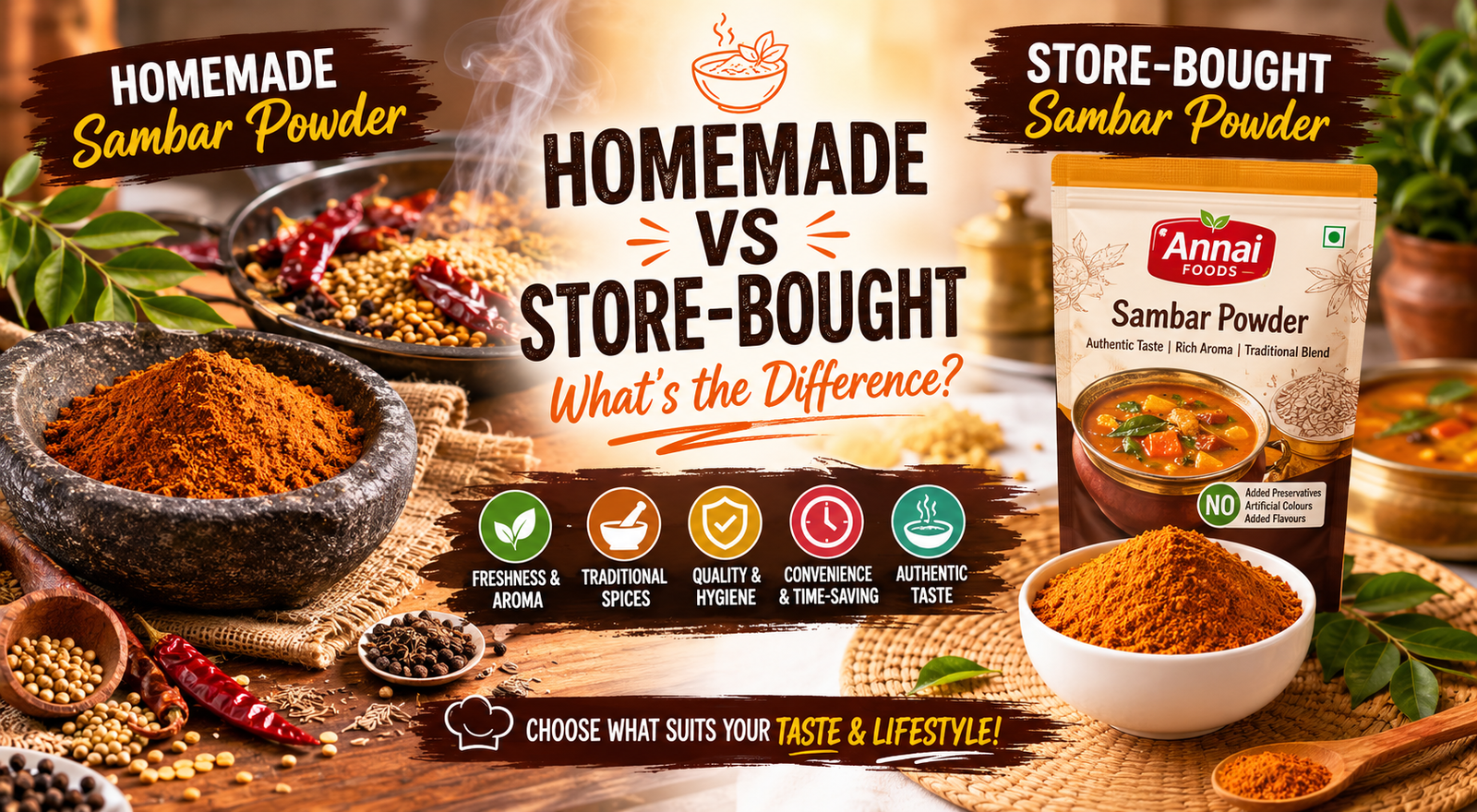
Homemade vs Store-Bought Sambar Powder: A Detailed Comparison
| Feature | Homemade | Quality Store-Bought |
|---|---|---|
| Freshness | Excellent | Very Good |
| Aroma | Strong | Strong if freshly packed |
| Customization | Fully customizable | Fixed recipe |
| Convenience | Time-consuming | Ready to use |
| Shelf Life | Moderate | Longer |
| Consistency | Batch varies | Highly consistent |
| Hygiene | Depends on preparation | Professionally processed |
| Availability | Requires preparation | Always available |
The comparison shows that neither option is universally superior. The best choice depends on your lifestyle and cooking preferences.
Freshness: The Biggest Difference
Quick Answer
Freshness significantly affects flavour because spices gradually lose essential oils after grinding.
Imagine grinding coffee beans moments before brewing versus using pre-ground coffee that’s been sitting on a shelf for months. The difference is immediately noticeable.
The same principle applies to spices.
Fresh sambar powder provides:
- Rich aroma
- Brighter colour
- Fuller flavour
- Better natural oils
Modern packaging technologies such as airtight sealing and moisture-resistant pouches help preserve these qualities in premium packaged products.
Ingredients Matter More Than Homemade or Packaged
Many people assume every homemade masala is healthier than every packaged spice blend.
That’s not always true.
A homemade powder prepared using low-quality spices won’t necessarily outperform a carefully manufactured premium product.
Instead, evaluate:
High-quality ingredients include:
- Whole coriander seeds
- Naturally dried chillies
- Fresh turmeric
- Premium cumin
- Aromatic curry leaves
- Carefully roasted lentils
Avoid products containing:
- Artificial colours
- Excess preservatives
- Fillers
- Added starch
- Synthetic flavour enhancers
A simple ingredient list is often a good sign of quality.
The Importance of Traditional Roasting
Roasting isn’t merely about drying spices.
It’s a carefully controlled cooking process that:
- Enhances aroma
- Removes raw flavours
- Balances bitterness
- Improves shelf stability
- Develops complexity
Traditional South Indian cooking relies heavily on this roasting technique.
Even premium commercial producers can achieve excellent results when they use slow, controlled roasting methods instead of high-temperature industrial processing.
Nutrition: Does Homemade Win?
Quick Answer
Both homemade and high-quality packaged sambar powder retain most of the nutritional benefits of spices when prepared and stored properly.
Traditional spices naturally contain beneficial plant compounds.
Examples include:
- Turmeric contains curcumin.
- Black pepper contains piperine.
- Coriander provides antioxidants.
- Fenugreek contributes dietary fibre.
- Curry leaves contain natural phytonutrients.
The nutritional difference between homemade and premium packaged powder is often smaller than people assume, provided the packaged product uses fresh ingredients and minimal processing.
Convenience for Modern Families
Today’s kitchens look very different from those of previous generations.
Many households include:
- Working professionals
- Nuclear families
- Students
- Bachelors
- Elderly couples
Preparing homemade sambar powder requires:
- Purchasing ingredients
- Cleaning spices
- Sun drying (if needed)
- Roasting
- Cooling
- Grinding
- Storing
The entire process can take several hours.
A trusted ready-made sambar powder allows families to enjoy authentic South Indian cooking without sacrificing valuable time.
Is Store-Bought Sambar Powder Really Less Authentic?
This is one of the biggest misconceptions.
Authenticity depends on the recipe not simply where the powder is made.
Many established South Indian food brands continue to follow traditional family recipes while using modern food safety standards.
When prepared with:
- authentic spice ratios,
- careful roasting,
- hygienic grinding,
- and quality packaging,
a packaged sambar powder can deliver a taste remarkably close to homemade.
In fact, many restaurants rely on professionally blended spice mixes to maintain consistency across every batch they prepare.
How to Choose the Best Sambar Powder
Quick Answer
Choose a sambar powder made with high-quality traditional spices, a simple ingredient list, hygienic processing, and airtight packaging. Freshness and authenticity matter more than whether it is homemade or store-bought.
When shopping for sambar powder, don’t just compare prices. A quality spice blend enhances every meal, while a poor-quality one can leave your sambar tasting flat or overly spicy.
Here’s a simple checklist:
✅ Check the ingredient list for whole spices like coriander, cumin, fenugreek, turmeric, black pepper, curry leaves, and lentils.
✅ Avoid products with:
- Artificial colours
- Excess preservatives
- Fillers or starch
- Artificial flavour enhancers
✅ Look for:
- Airtight packaging
- Recent manufacturing date
- Trusted South Indian brands
- Hygienically processed products
- Small-batch production where possible
A premium sambar powder should smell fragrant as soon as you open the pack. If the aroma is weak, the spices may have lost much of their natural flavour.
Common Mistakes People Make When Buying Sambar Powder
Many shoppers unknowingly choose products based only on price or packaging. Here are some common mistakes to avoid:
1. Buying the Cheapest Option
Low-cost spice blends may contain lower-quality ingredients or fillers that affect flavour.
2. Ignoring the Manufacturing Date
Even well-made sambar powder loses aroma over time. Fresher packs generally provide better taste.
3. Overlooking the Ingredient List
A shorter, natural ingredient list is often a better choice than one filled with additives.
4. Improper Storage at Home
Exposure to air, moisture, and sunlight reduces freshness quickly.
How to Store Sambar Powder for Maximum Freshness
Quick Answer
Store sambar powder in an airtight container away from heat, moisture, and direct sunlight to preserve its aroma and flavour.
Follow these simple storage tips:
- Transfer opened packs into airtight containers.
- Always use a dry spoon.
- Keep away from the stove to reduce exposure to steam.
- Avoid refrigeration, as condensation may introduce moisture.
- Buy quantities that match your monthly cooking needs.
Proper storage helps retain the natural oils responsible for the rich aroma of traditional spices.
Homemade or Store-Bought: Which Should You Choose?
The answer depends on your lifestyle.
| If You Are… | Best Choice |
|---|---|
| A homemaker who enjoys preparing spices | Homemade or premium packaged |
| A working professional | Quality store-bought |
| A bachelor living alone | Ready-to-use packaged sambar powder |
| A student | Convenient packaged option |
| A busy family | Trusted premium brand |
| Someone seeking consistent flavour | Professionally blended sambar powder |
There is no one-size-fits-all answer. The best choice is the one that fits your cooking habits while delivering authentic South Indian flavour.
Expert Insight: Tradition Meets Modern Convenience
Food traditions evolve with changing lifestyles.
Years ago, many families prepared spice blends several times a year because fresh ingredients were easily available, and households had more time for elaborate cooking.
Today, work schedules and busy routines make that less practical.
Fortunately, modern food processing techniques allow reputable brands to preserve freshness, aroma, and flavour while maintaining strict hygiene standards.
Rather than asking, “Homemade or packaged?” a better question is:
“Does this sambar powder use quality ingredients, traditional recipes, and careful processing?”
That answer matters far more.
Why Premium Sambar Powder Is Worth Considering
If you choose a trusted brand that follows authentic South Indian recipes, you can enjoy many benefits:
- Consistent taste in every meal
- Carefully balanced spice ratios
- Hygienically processed ingredients
- Convenient everyday cooking
- Time-saving preparation
- Reliable quality throughout the year
For busy households, this combination of tradition and convenience is often the ideal solution.
People Also Ask (PAA)
Is homemade sambar powder healthier than store-bought?
Homemade sambar powder can be healthier if it uses fresh, high-quality ingredients without additives. However, premium packaged products with clean ingredient lists and hygienic processing can offer comparable nutritional value.
How long does sambar powder stay fresh?
When stored in an airtight container away from heat and moisture, sambar powder typically retains its best flavour for several months. Always refer to the manufacturer’s expiry date.
Which spices are essential in authentic sambar powder?
Traditional sambar powder usually includes coriander seeds, dried red chillies, cumin, black pepper, fenugreek, turmeric, curry leaves, chana dal, and toor dal.
Can bachelors use ready-made sambar powder?
Absolutely. High-quality ready-made sambar powder makes it easy to prepare delicious homemade sambar in less time, making it ideal for students and working professionals.
Why does homemade sambar smell different?
Fresh roasting and immediate grinding preserve natural essential oils, creating a stronger aroma. Well-manufactured packaged products also retain excellent fragrance through proper processing and packaging.
Frequently Asked Questions
What makes authentic South Indian sambar powder unique?
Its balanced combination of roasted traditional spices creates a rich, aromatic flavour that complements lentils, vegetables, and tamarind without overpowering them.
Can packaged sambar powder taste like homemade?
Yes. Premium brands using authentic recipes, fresh ingredients, and hygienic processing can deliver a flavour very close to homemade.
How much sambar powder should I use?
Typically, 1½–2 tablespoons are sufficient for preparing sambar for a family of four. Adjust according to your preferred spice level.
Is sambar powder only used in sambar?
No. It can also enhance vegetable curries, kootu, poriyal, lentil dishes, rasam variations, and even marinades for a subtle South Indian flavour.
How can I tell if my sambar powder has gone stale?
A weak aroma, dull colour, or flat taste usually indicates that the spice blend has lost freshness.
Conclusion
The debate between homemade and store-bought sambar powder isn’t about declaring one option the winner. It’s about understanding what truly creates exceptional flavour.
Homemade masala offers freshness, personalisation, and family tradition. Premium packaged sambar powder offers consistency, hygiene, convenience, and dependable taste for modern kitchens.
The real secret lies in choosing products made with carefully selected traditional spices, authentic recipes, and quality processing.
Whether you’re a homemaker preparing meals for your family or a bachelor cooking your first pot of sambar, a good spice blend can make all the difference.
If you’re looking for authentic South Indian flavour without spending hours roasting and grinding spices, Annai Foods Sambar Powder is crafted using carefully selected traditional spices to bring the comforting taste of homemade cooking to your everyday meals.
Bring home the aroma of tradition and enjoy delicious, flavourful sambar with every serving.
Internal Link Suggestions
Link this article to related pages on your website:
- Sambar Powder Product Page
- Traditional South Indian Masalas
- Health Mix Collection
- Chicken Masala
- Garam Masala
- Chilli Powder
- Coriander Powder
- South Indian Recipes Blog
- About Annai Foods
- Contact Us
Reference authoritative resources such as:
FAQ
1.What is the difference between homemade and store-bought sambar powder?
Homemade sambar powder is freshly roasted and ground, offering a stronger aroma and customizable flavour. Premium store-bought sambar powder provides convenience, consistent taste, hygienic processing, and longer shelf life while maintaining authentic South Indian flavour.
Which sambar powder is better?
The best sambar powder depends on your needs. Homemade blends offer freshness and customization, while premium packaged options provide convenience, consistency, and authentic taste for everyday cooking.
How do you choose a good sambar powder?
Choose sambar powder made with traditional spices, minimal additives, recent manufacturing dates, airtight packaging, and a trusted brand known for authentic South Indian recipes.
🌿 Homemade or Store-Bought? Which Sambar Powder truly delivers the authentic taste of South India? Discover the key differences in freshness, flavour, nutrition, convenience, and cooking experience. Read our expert guide and choose the perfect spice blend for your kitchen.
👉 Experience authentic flavour with Annai Foods Sambar Powder and make every bowl of sambar unforgettable.


Log in
By continuing, you accept the Website Regulations , Regulations for the sale of alcoholic beverages and the Privacy Policy
You dont have an account yet? Register Now